
One fruit.
Water.
That's the shot.
Baobab dries on the branch. We add water, nothing else. 3 g of fiber, 160 mg of potassium, 10 calories a shot. No sodium, no added sugars*.

Unimproved on purpose.
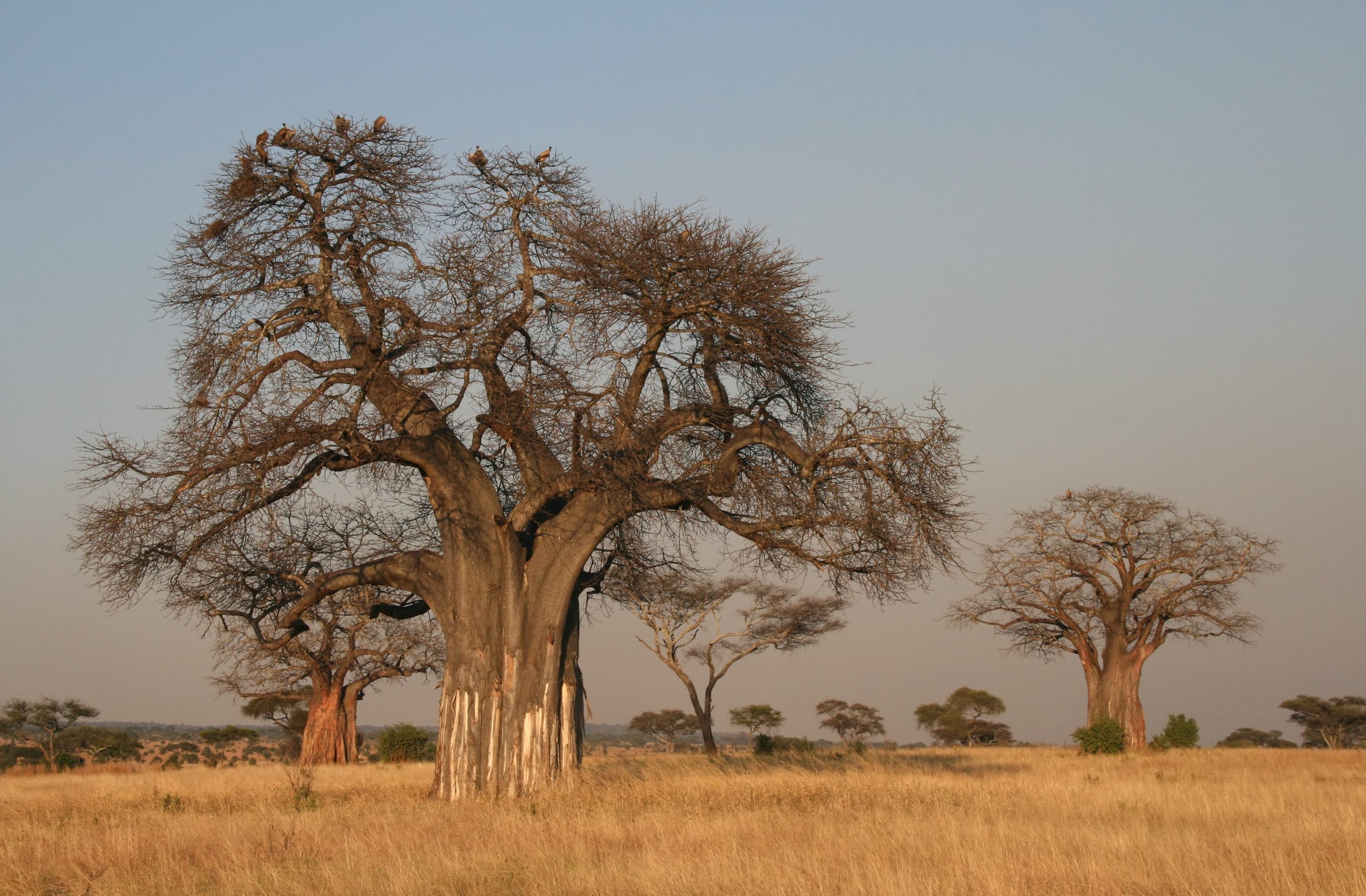
Nobody plants these trees
What is in the bottle
It settles. Shake it.
The fiber comes in two kinds. The soluble part is dissolved in the liquid, where you can't see it. The insoluble part is heavier than water; left alone it settles into a pale layer at the bottom. You're watching that happen. The 3 grams on the label count both.
If nothing settles, be suspicious.
Also in the bottle: about 140 mg total polyphenols per shot, measured by Eurofins on the finished product. No Daily Value exists for polyphenols, so it stays out of the panel.
Excellent source of fiber. Good source of potassium.† Those terms are defined by FDA rules and worked out per 240 mL reference amount. Per shot, the panel shows 11% and 4%. Both numbers are on the label. Both are true.
* Not a low calorie food; see nutrition information for sugar and calorie content. † Per 240 mL reference amount customarily consumed (21 CFR 101.12). Figures from the Eurofins finished-product report AR-26-SU-102857-04 (2026-07).
Baobab is one of the only fruits on Earth that dries naturally on the branch. No picking green, no ripening rooms. What falls is already a chalky, tart pulp with the water gone.
The trees are not farmed. Fruit is hand-collected from wild stands in southern Africa in the dry season. We pick the fruit; the tree stays.
- Origin
- Wild harvest, Africa
- Part used
- Fruit pulp, whole
- Process
- Pulp separated from shell and seed, water added back, pasteurized, bottled in glass
- Bottled in
- Vietnam, GFSI-certified facility
- Shelf life
- 18 months unopened
The tree does the drying. That is why the pulp keeps for years without anything added, and why we can add the water back instead of taking it out.

Born where the tree grows.
We started with people who had been collecting this fruit in the wild for years, and one plain idea: don't improve it. Here's the whole story.
Read the origin →Certificates and lab reports
Every batch of the Shot is analyzed as a finished product. The bottling facility holds two GFSI certifications.
- BRCGS A+
- FSSC 22000
- FDA-registered
- Eurofins tested

Whole-fruit baobab pulp for yogurt, oats and smoothies. Two ingredients.
Learn more →Not on a shelf near you yet.
Leave your email and we'll tell you the day it is, and where. One email. Not weekly.
